Posted on, 11/07/2026
CLOUD & STORAGE DATA / ANALYTICS / AI / PRIVACY DIGITAL TRANSFORMATION
Solving the AI Adoption Paradox: Lessons from Inetum’s COBORG FrameworkSolving the AI Adoption Paradox: Lessons from Inetum’s COBORG Framework Everyone wants to “do something with AI,” but few organizations are seeing results. Despite an estimated $30–40 billion invested globally in generative AI, a recent MIT study found 95% of projects fail to deliver value. It also found 74% of companies struggle to scale AI beyond pilots, while 30% abandon proofs of concept altogether. MIT called it the “GenAI Divide,” Forbes reports. Too often, initiatives meant to elevate business performance remain stalled experiments because of a lack…

Posted on, 29/06/2026

DATA / ANALYTICS / AI / PRIVACY
IA & trésorerie : révolution… ou juste un bon copilote ?On entend partout que l’IA va révolutionner la trésorerie des entreprises. Franchement ? Pas exactement. L’IA ne voit pas l’avenir. Elle lit simplement mieux que nous […]
Posted on, 23/06/2026
GREEN IT & RESPONSIBLE DIGITAL
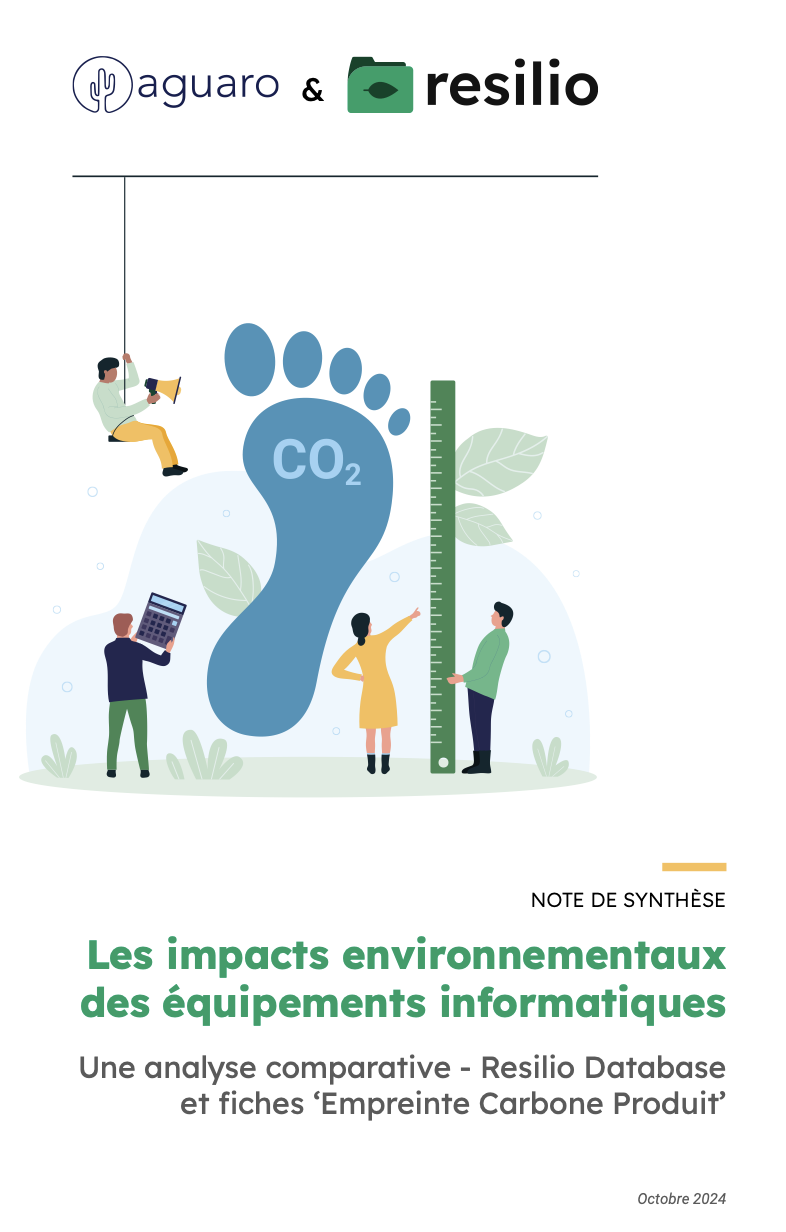
Les impacts environnementaux des équipements informatiques - Une analyse comparative : Resilio Database et fiches 'Empreinte Carbone Produit'Ce document présente la comparaison des impacts environnementaux d'ordinateurs portables, entre des fiches 'Empreinte Carbone Produit' publiées par les fabricants, et les valeurs modélisées dans Resilio Database.
Posted on, 11/07/2026

CLOUD & STORAGE DATA / ANALYTICS / AI / PRIVACY DIGITAL TRANSFORMATION
The New ERP Backbone: Databricks, Inetum, and the Shift to AI-Native ERP ArchitecturesThe New ERP Backbone: Databricks, Inetum, and the Shift to AI-Native ERP Architectures ERP systems are entering an AI-augmented era. Across finance, supply chain, manufacturing, and customer operations, ERP leaders are under pressure to embed AI into forecasting, planning, and day-to-day execution. The ambition is clear. The underlying architecture often is not. Many ERP environments still rely on fragmented data warehouses, siloed governance models, and batch-driven reporting that were never designed to support real-time, AI-driven operations. ERP Data Foundations Are Not AI-Ready Traditional…

Posted on, 15/07/2026

CYBERSECURITY
Data Governance & IT Governance: The Keys to Data and Digital SovereigntyIn a world where data forms the lifeblood of the digital economy, digital sovereignty has become a strategic success factor. Organizations face the challenge of managing their data securely, efficiently, and in compliance with regulations without losing control over their most valuable asset. The key lies in two often-overlooked disciplines: Data Governance and IT Governance. Frequently seen as abstract concepts, they are in fact the cornerstones of modern corporate management. They determine how data is used as a resource, how risks are minimized, and how regulatory…

Posted on, 20/07/2026

DIGITAL TRANSFORMATION
Le smart by design, un tournant dans la conception des établissements de santéLe numérique ne peut plus être pensé comme une surcouche venant s’ajouter aux établissements de santé une fois les bâtiments livrés. Face aux enjeux énergétiques, organisationnels et opérationnels auxquels le secteur est confronté, architecture, exploitation et digital doivent désormais être pensés ensemble. Le « smart by design » s’impose ainsi comme un levier de flexibilité, de résilience et de performance durable pour les infrastructures hospitalières.
Posted on, 11/07/2026

CLOUD & STORAGE CYBERSECURITY DATA / ANALYTICS / AI / PRIVACY
Why Inetum Sees Control — Not Infrastructure — as the Real Sovereignty ChallengeWhy Inetum Sees Control — Not Infrastructure — as the Real Sovereignty Challenge Enterprises modernizing ERP operate under sharper expectations around jurisdiction, accountability, and verifiable outcomes. Processes that once relied on human intervention now unfold through models, automated triggers, and continuous data exchange. Responsibility now extends beyond people to the systems that produce results. Attention rises quickly to the executive level. Leaders want clarity on who holds authority across providers, how risk is managed, and whether oversight can withstand regulatory…
Posted on, 15/07/2026

CYBERSECURITY
IT Risk Management in Transition: From Reactive Security to Digital SovereigntyIT infrastructure risks can no longer be viewed primarily as technical concerns. Cloud services, mobile work environments, and growing regulatory requirements mean that technical vulnerabilities can quickly have business-critical impacts. As a result, IT risk management is becoming a strategic management responsibility with board-level visibility. IT risk management affects organizational stability, security, and long-term resilience. Organizations that address risks only after something goes wrong lose valuable time or, in the worst case, control of their IT environment. Modern…
Posted on, 23/06/2026
GREEN IT & RESPONSIBLE DIGITAL
Resilio et ecoinvent créent un partenariat pour révolutionner l'évaluation environnementale du numériqueDécouvrez comment Resilio et ecoinvent transforment l'évaluation environnementale du numérique avec une transparence, une précision et une évolutivité accrues dans l'Analyse du Cycle de Vie (ACV) pour les équipements électroniques.

Posted on, 15/07/2026

SOFTWARE & PACKAGES CLOUD & STORAGE CYBERSECURITY
XWiki SAS is now ISO 27001 certifiedIn May 2026, XWiki SAS achieved ISO 27001 certification, an important milestone for how we manage information security across our services. The certification covers the cloud hosting and support services we provide for XWiki and CryptPad. ISO 27001 is an internationally recognized standard for information security management. In practical terms, it means that the way we identify risks, protect information, manage access, respond to incidents, and improve our internal processes has been independently assessed against a clear security framework. For our customers, this provides added assurance…
Posted on, 20/07/2026
DATA / ANALYTICS / AI / PRIVACY
Optimiser les flux pour transformer l’expérience de travailEt si votre bâtiment pouvait se souvenir ? Aujourd’hui, nos espaces de travail souffrent d’une forme d’amnésie économique et organisationnelle. Chaque jour, ils recommencent à zéro, allumant des étages vides et chauffant des bureaux fantômes, comme s’ils n’avaient retenu aucune leçon de la veille. Pourtant, la compréhension approfondie de la dynamique des utilisateurs se révèle essentielle face aux coûts immobiliers, représentant entre 10 et 20% du coût total du travail (X. Baron, 2011). Face à ce constat, la question est double : pourquoi et comment ?

Posted on, 16/06/2026
INFRASTRUCTURES / NETWORKS / DATACENTERS
Réseaux informatiques : un acquis sous-exploitéAlors que l’on estime entre 240 et 520 milliards de dollars les investissements mondiaux dans la cybersécurité en 2026, les infrastructures informatiques attirent paradoxalement moins d’attention. Système, stockage et réseau sont aujourd’hui considérés comme acquis et délaissés au profit de nouvelles technologies, pourtant entièrement dépendantes de ces fondations. Zoom d’un expert sur les réseaux informatiques dans une PME : pourquoi sont-ils essentiels, comment mieux les exploiter, quels risques à les négliger ?
Posted on, 15/07/2026

DIGITAL TRANSFORMATION
Rethinking IT Transformation – with DEX as a Key to SuccessIT transformation is more than just adopting new technologies – it’s about fundamentally changing the way we work. While organizations invest in modern IT tools, one critical question often remains unanswered: How can IT truly help employees work more productively, happily, and efficiently? UEM has proven to be an effective way to manage devices securely and efficiently. But in a hybrid work environment, that alone isn’t enough. Organizations need a people-first approach – and that’s where Digital Employee Experience (DEX) comes in. The…
Posted on, 15/07/2026
SOFTWARE & PACKAGES DIGITAL TRANSFORMATION
XWiki and OpenProject strengthen bidirectional integration between project work and knowledgeXWiki and OpenProject have announced continued progress on their bidirectional integration, enabling teams to connect project management and documentation more seamlessly. Presented during a joint webinar on June 24, the update highlights how users can now link work packages and knowledge in both directions, reducing fragmentation between tools. The integration aims to support organizations seeking alternatives to Jira and Confluence by offering more control, flexibility, and a unified open source collaboration environment.
Posted on, 15/07/2026
SOFTWARE & PACKAGES DIGITAL TRANSFORMATION
XWiki and OpenProject join EuroCommons to support European digital sovereigntyAs European organizations face growing pressure to regain control over their digital infrastructure, initiatives like EuroCommons are gaining momentum. Bringing together public institutions, companies, and open source providers, EuroCommons aims to create a shared framework for building interoperable, transparent, and sovereign digital ecosystems. By aligning expertise and requirements across sectors, it supports a collective approach to reducing dependency on proprietary platforms and fostering long-term digital resilience across Europe.